While not yet commercially available, the retatrutide availability timeline suggests it could enter the market within the next few years
For researchers who want to understand why proper preparation matters beyond the mechanics, the resource on peptide education and health provides the foundational context that makes every protocol decision more informed
5-Amino-1MQ Key Research Facts Chemical name: 5-Amino-1-Methylquinolinium (also abbreviated as 5A-1MQ or 5MQ) Target enzyme: Nicotinamide N-Methyltransferase (NNMT) Mechanism: Competitive inhibition of NNMT reduces 1-MNA production, preserves nicotinamide for NAD+ synthesis and SAM for epigenetic methylation Selectivity: High selectivity for NNMT does not inhibit related SAM-dependent methyltransferases or NAD+ salvage pathway enzymes Membrane permeability: High passive and active transport permeability confirmed in PAMPA and Caco-2 cell assays NNMT expression: Upregulated in obese adipose tissue, multiple cancer types, and aged skeletal muscle tissue contexts of primary research interest Downstream targets: NAD+ availability, SIRT1/SIRT3 activity, SAM-dependent epigenetic methylation, lipogenesis, energy expenditure Pre-clinical models: Diet-induced obese (DIO) mice, 3T3-L1 adipocyte cell models, aged mouse skeletal muscle models, HeLa cancer cell lines In vitro cell viability: No impact on cell viability at 10 M concentration in 3T3-L1 pre-adipocytes in published toxicity profiling What Does 5-Amino-1MQ Do in Research

Mol Cell
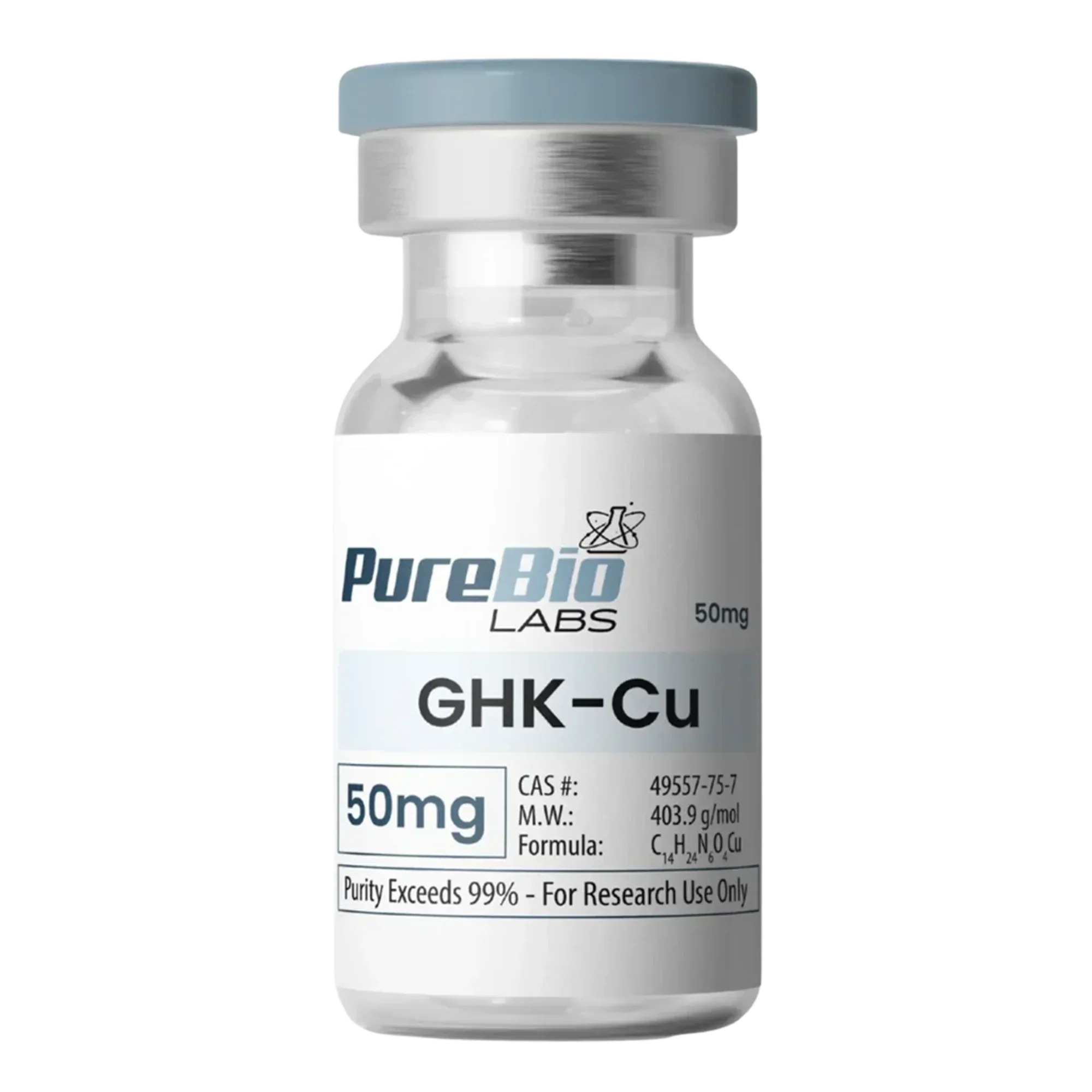
GHK-Cu peptide studied for collagen production, cellular regeneration, and longevity-focused research applications
5%), emotional lability (2% vs